Saturday, May 10, 2008

Coming of age, and doing so continually

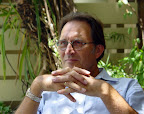
"How does it feel to be seventy?", she asked me. It was only one day after I had started out on the eighth decade of my life. Two days earlier she had herself reached the age of ten. My brief answer to her question was: "Well, the same as yesterday, I presume." Yet, in a culture in which perceptions of quantity are profoundly conditioned by the long-term use of the decimal system, it is only natural that the passage from one decade of one's life to the next does not go unnoticed. When ten years earlier I turned sixty and now that I recently turned seventy, both occasions were celebrated by surprise parties at which friends and relatives felt they should express their thoughts and feelings to me, some of them clearly taking the opportunity to briefly reflect on the fact that they, too, were advancing surprisingly faster than they realized on their trajectory through life, and ultimately to its end.

The Merriam-Webster Online Dictionary defines 'coming of age' as the "attainment of prominence, respectability, recognition, or maturity." The expression is normally used to indicate the stage of becoming an accepted member of the community of adults, someone who can be held accountable for what he or she does. Rites of passage of some sort are frequently associated with reaching this stage. However, from the perspective of the growing individual, coming of age never really stops and no particular passage can be universally seen as more relevant or important than another as the continually transforming power of learning impacts differentially on each of us depending on who we are as well as on the highly varied circumstances of our evolving existence.

For me, I recognize several stages in how I have perceived life as it evolved. Those stages are not very clearly linked to a particular age bracket. Rather, the next stage grows out of the previous one, but does so quite rapidly, it seems. Thus, there was an early period when my queries about what it meant to be dead (a relevant question when you want to know what it means to be alive) were met by my mother with the response that this wasn't an issue for me. Death was too far away to be a relevant concern. She would tell me when it would become relevant. Yet, I grew up in an environment where religious convictions held it that there would be life after death and it was thus perfectly natural for a small child like me, who is being told such stories, to be inquisitive about the transition from this life to what is supposed to follow. While my mother's answer did not satisfy my curiosity, I guess it led me to develop an initial perspective on life as something more or less indefinitely long.

However, as I grew up during the Second World War, death was never far away. In fact, I witnessed the disappearance of people in my environment from a very early age onward. It didn't take long for death to become a recognized fact of life. Yet, what I assume is the biology of growth of a young organism--even in the circumstances of deprivation and destruction that characterized those war years--seemed to prevent me from seeing death as a possible part of my own life. Death was what happened to others. My role in life was to live.

The thought that one does something with one's life came later, somewhere during adolescence. It's the time when life starts becoming defined by its pursuits. The prospect of death is there, but pursuits take precedence. Besides, much more still lies ahead than what came before. Moreover, what came before looks like eternity. The beginning of it has left no conscious trace in memory. One looks back to a point that vanishes in time. Comparatively, what lies ahead is an equally undefined trajectory the end of which is similarly marked by oblivion.

It roughly took me until the age of sixty before the thought that life has an end had become a pervasive element of my day-to-day experience and my thinking about the future--my future, the future that was still in my hands. A new phase in life took shape, one that centered on ideas like completion and reflection. At seventy I am still very much in the middle of that phase. I revisited and continue to revisit the things that were important to me in the past. I join them together, making them interact, allowing them to acquire new meaning in the present day context. I'm also thinking about how to leave and what to leave behind when time comes to go. Not that I think the end is near, but the reality of an end has become sufficiently manifest that I feel this phase in life is also characterized by urgency. Particularly, I am trying to discover ways to let my personal learning journey become an integrated part of the learning that others, who will survive me, will then still engage in for some time. Hopefully they will take similar care for ensuring the sustainability of the learning ecology as generation upon generation of humans partakes in it.

Sunday, April 16, 2006

L'attentat

I just read Yasmina Khadra's book L'attentat, published in 2005 by Éditions Julliard in Paris, France (an English translation with the title The Attack is foreseen to come out in May 2006). I finished the 268 pages in less than two days. The book ranks in my appreciation among the best I've come across over the many years I have been reading novels, which, I must mention, I choose selectively as I am a slow reader. Yasmina Khadra (whose real name is Mohammed Moulessehoul) has the kind of imaginative mind that also characterizes writers such as Gabriel García Márquez, Italo Calvino, and John Coetzee. While the reader progresses through the book an ever more intricate picture emerges of a reality that has no explanation in any single kind of logic. The more one advances, the more one becomes aware of the painful yet beautiful complexities of life and the realization that one reconciles with life's perpetual onslaught on life ultimately only in death.

Does it matter that the story is set in the Middle East and thus includes some of the ingredients that link it in our mind to the generalized anxiety generated by such highly publicized events as 9/11 and the bombings in Madrid and London? I don't think so. The ability to engage in incomprehensible acts of violence is not new to the world. It existed long before 9/11, Abu Ghraib and Guantánamo. We readily take incomprehensible violence for granted when it can somehow be embedded in the dominant discourses of the group to which we pertain ourselves and get confused and disturbed when it is part of the discourse of another community. The strength of Khadra’s literary creation is that there is no attempt in L’attentat to explain, categorically condemn or justify anything. The book refrains from demarcating good and evil, even though some of the most horrific human made events and circumstances provide the setting for the protagonist’s quest to comprehend.

This book is a welcome antithesis to some current trends to explain the complexities of the present day world away in terms of simplistic notions such as the clash of civilizations and cultures, or by dividing the world up in spheres of good and evil. In this book everything is human--and that isn't always entirely easy, but it’s real.

Books like Khadra’s L‘attentat, García Márquez’s Cien años de soledad (Hundred years of solitude), Calvino’s Se una notte d'inverno un viaggiatore (If in a winter’s night a traveler), or Coetzee’s Life and times of Michael K leave permanent marks in the mind in the form of complex images that are open-ended. It is this complex open-endedness that allows such marks in the mind to serve as architectural landmarks in building the mind’s capacity to interact with the world from perspectives that are increasingly more complex and eco-self-organizing, a term I borrow from Edgar Morin (see e.g. Introduction á la pensée complexe, Paris, Éditions du Seuil, 2005). For such complex images to take hold in the mind in an eco-self-organizing manner one must be emotionally prepared to receive and integrate them. When that happens, learning will be profound. It goes without saying that such deep learning can only take place under condition of non-coerciveness.

Saturday, April 15, 2006

To school, or not to school: is that the question?

I have a kind of love-hate relationship with the school. Having spent significant parts of my life in school settings (from kindergarten to postgraduate level; as student, teacher and administrator), I owe some of my best and some of my worst experiences to the school. If given the opportunity, much can easily be improved. In fact, on various occasions did I take such opportunities or did opportunities accidentally come my way. My experience is that in such cases most of what was needed to generate the desired improvements was simply the willingness to take a step back from past - institutionalized - positions and collaboratively create an environment of trust. The rest then followed.

Unfortunately, few institutionalized school environments are based on trust (for an exception see some of the experience reported at http://adec.edu.au/idec/idec-2006/) and more than just trust may be needed for still more fundamental changes. Thus, I am currently and for the next two weeks facilitating an online dialogue on the question in the title of this post. It’s a question regarding the two options, or any mix of those options, and a question regarding the question itself. Is the first question relevant? If so, why - and what does it lead to? If not, what other or additional questions must be asked?

More about the dialogue can be found at http://www.learndev.org/ToSchoolOrNotToSchool.html. At the same URL there is also a link to a two-page introductory statement that aims at serving as a prompt for the discussion. Besides, details are available about how to access and/or participate in the dialogue, which runs until April 27, 2006.

Friday, February 24, 2006

Those who went before us

Today, February 24, is the birthday of my mother. She would have been 99 years old had she not left us, the third in sequence of the four parents my wife and I share, some seven years before the last of our parents defiantly gave up her life, a year and a half ago. With all of them gone, we are now alone with our memories.

Grief, as I see it, is the painful process of learning to live with the memories of those who went before us. Everything of the relationship that once existed has all of a sudden become internal, part of our fragile selves. We are the sole guardians of the memories of those who went before us, facing the difficult task of giving those memories new meanings.

At times, memories become closely associated with objects, such as the oil lamp above. My mother used to recall a cherished image of her older brother - dead on his 31st birthday - playing the violin, standing next to that lamp, his head slightly inclined, allowing as much of the light as possible to illuminate the scores from which he was playing. That same lamp now allows me to re-create in my mind images of those precious moments that accompanied my mother's life.

Feral learning (2)

In a comment added to my earlier post on Feral Learning (February 24, 2006), Yusra Visser refers to the need for actors in a structured learning environment, such as is typically the case in an instructional context, to be able to cope with ambiguity, challenge and frustration. I imagine that an animal that escapes from domestication faces a similarly uncertain world as do learners (and their teachers) when they decide to depart from the beaten track, the given curriculum, to walk out and to walk on. The more rigorously a set curriculum is being imposed, the less it will leave scope for innovation and for the pursuit of individual pathways to learning. The curriculum, the way it is regularly interpreted as a linear sequence of knowledge and skills areas ordered according to some logical principle, however much sense that principle may make, has also a deadening influence on those who learn and teach if there is no vision present in the learning environment that allows the given curriculum to be seen as just one option and not necessarily the best one in all circumstances for all people. Flexibility is thus required in any instructional context whose primary aim is the growth of those who participate in it in accordance with their evolving needs. Thus, if feral learning is to emerge from an instructional context, the process will be enormously helped if it is accompanied by feral teaching. Few schools, whether at the K-12 or higher level, appreciate such flexibility, though. Many school administrators and deans frown on feral teachers. Indeed, as the comment states, flexibility implies trust among those who collaborative learn and those who guide and facilitate that process. Such trust is often hard to be found in schools. It is also a notion largely absent in the scholarly literature in the field of education.

Mary Hall's reflective journal on instructional design for flexible learning, started, I believe, as a course-based activity, is in and of itself an encouraging example of how a given course structure can lead someone to walk off in directions that the curriculum may not have foreseen, provided of course that the right conditions are in place. Besides, Mary's blog is an excellent resource for thoughts, experiences, findings, and links to relevant papers about feral learning. It is highly recommended.

Saturday, February 04, 2006

Feral learning

Yesterday I wrote a brief contribution to an online discussion (conducted at www.cabweb.net) on 'feral learning,' a term apparently coined by Ted Nunan in a paper on Flexible Delivery - What is it and why is it a part of current educational debate?. The term 'feral' can refer to the state of being wild, untamed, non domesticated; it can also refer to having become free of domestication. According to the Wikipedia, a feral animal is "one that has reverted from the domesticated state to a stable condition more or less resembling the wild."

Below follows an adapted version for this blog of what I wrote.


I think that the innate resourcefulness of learners is generally poorly recognized by those who feel they are responsible for other people's learning. While he term feral learning was unknown to me before I joined the above mentioned online discussion, the reality of feral learning has been known to me from almost the earliest moment - now more than 40 years ago - when I started teaching.

Reflecting on my own learning history, I am clearly able to identify instances when I escaped from the domestication by the formal learning systems of which I was part, going my own way, sometimes in the company of others, and discovering vistas I would have never seen had I stayed within the bounds of what was being offered to me. This happened long before I started teaching myself. I recognize, though, that I owe a number of these diversions to prompts I received from being part of formal environments, which is to say that I am not 'in principle' against formal learning structures (at least not as long as they don't become suffocating).

Over time, I've been involved in plain ordinary face-to-face teaching, traditional distance education from before the time when online communication became a major dimension of it, as well as in the current reality of interacting with students online. In all cases I've found that those who learn best are those who are best able to beat the system. By 'learning best' I do not mean 'getting the highest grades' (though normally the class of people I refer to does make good, and sometimes the best, grades). What I mean is that such people show the greatest promise of continually transcending themselves. With more than 40 years of experience I am now able to look back at what initially were mere assumptions and perceptions about those in whose learning I got involved. What I then, long ago, felt to be the case, I now know, based on longitudinal observation and experience, is the case.

In other words, as someone who occasionally gets involved in teaching other people's programs, I feel perfectly comfortable with taking the 'risks' (if that is the right word) involved in not slavishly following prescribed programs and curricula, attaching great value to the creativity of my students. I would even go as far as deliberately creating, wherever I could, the conditions in which my students' creativity would be optimally stimulated, thus complicating my life as a teacher as such creativity would continually force me to reassess the reasonableness of what I am doing.

Assessment (which was the topic under discussion in the referred online dialogue), particularly when it takes the form of attributing grades and issuing degrees, certificates, and the like, often interferes adversely with the kind of openness that feral learning assumes. There is thus a great need to reassess assessment practices in the light of the kind of learning that must be developed for citizens of the 21st century. Few people ask themselves deep questions about what learning for the Knowledge Age really means more than that it has something to do with the pervasive presence of computer tools in our daily life. Readers of this blog may want to do a search for the writings of Carl Bereiter and Marlene Scardamalia (often in collaborative partnership) who explore this area. An activists' approach to what should be done in terms of "healing ourselves from the diploma disease" can be found at
http://www.swaraj.org/shikshantar/healingdiplomadisease.pdf. Debate on what should be expected of learners in our rapidly changing learning landscape is available at http://www.learndev.org/ibstpi-AECT2005.html.

Finally, the following question was asked in the post I was reacting to: "Are your learners frustrated in their learning space?" My answer to that question is: Learners ought to be frustrated in their learning space if that space is a closed space.

Thursday, February 02, 2006

To start this off: My perspective on human learning

I began this blog some time ago as a means to help me develop my ideas about human learning in an environment that is - at least to an extent - more open to whoever is interested than the traditional environment of professional publishing. It took me more than a month before I found - or rather, made - the time to post this first entry.

To start this off I will first explain what, in my view, learning actually means. To make the task easier, I copy much from something I recently wrote in the context of a debate that linked the question 'What does it mean to learn?' to another question, namely 'What does it mean to be human?' (Readers interested in that debate or who want to check the various references in what follows, can find it at
http://www.learndev.org/ibstpi-AECT2005.html.

Here is what I wrote:

I usually express my view of what it means to be human in materialistic terms. My down-to-earth view of members of the human species is that they are nothing more but also nothing less than pieces of organized matter--just the same as rocks, plants, and other animals. What makes them special and somehow unique is the fact that, in the course of evolution, humans became endowed with the faculty of consciousness, the ability to reflect on their actions, to hold things in mind and contemplate them, carrying out thought experiments, and to foresee, to an extent, the consequences of what they intend to do. What exactly consciousness is; to what extent some form of it might be present in other species or be an exclusive feature of humans; what allowed it to emerge; and what are the neuronal correlates of consciousness are questions in which only recently some tentative insights have started to develop (e.g., Edelman and Tononi, 2000; Carter, 2002; Greenfield, 2002; Edelman, 2004; Koch, 2004; Koch 2005; Steinberg, 2005).

Consciousness allows us to experience joy and sorrow as we transit through life. It is the cause of the eternal amazement with which we stand, generation after generation, in awe of who we are, where we come from, what we are here for, and where we are going. It is at the origin of our sense of belonging, of being part of a larger whole, an experience to which we give expression in religious beliefs, mythologies, evolving world views based on the methodical and disciplined pursuit of scientific insight, and great works of art.

Within the above perspective, being human means having the unique faculty of participating consciously--for a brief moment--in the evolution of the universe. This is both an outrageous claim and a call to humility.

If one accepts the above vision of being human, then learning must be conceived of in a similarly broad perspective of purposeful interaction with an environment to whose constant change we must adapt while being ourselves the conscious participants in creating such change. 'Constructive interaction with change' thus ought to feature prominently in a definition of human learning at this level, expressing what ultimately learning is all about. Besides, it should be recognized that not only individual human beings partake in such constructive conscious interaction with change, but that the same behavior equally applies to larger social entities at a variety of levels of complex organization. Moreover, learning as conceived in this perspective is intimately interwoven with being alive. It is therefore not something one engages in every now and then, but rather a lifelong disposition. Finally, the disposition referred to in the last sentence is characterized by openness towards dialogue. Hence, I define human learning as "the disposition of human beings, and of the social entities to which they pertain, to engage in continuous dialogue with the human, social, biological and physical environment, so as to generate intelligent behavior to interact constructively with change" (J. Visser, 2001). When I first proposed this definition, I called it an 'undefinition,' referring to its intended purpose to remove the boundaries from around the current, too narrowly conceived, definitions of learning.

The above definition of learning applies at the most comprehensive level of being human, the level at which we are most distinctively different from anything else that learns, such as non-human animals or machines. Nonetheless, it should be recognized that human adaptive behavior, and thus learning, occurs at least at the following four levels of organizational complexity, some of which we share with other organisms (J. Visser, 2002, n.p.):

  • Level 1: Interaction with threats and opportunities in the environment through genetically transmitted preprogrammed responses, e.g. fight and flight responses.
  • Level 2: Acquisition of essential environment-specific abilities, such as mastery of the mother tongue, driven by an inherited predisposition to do so.
  • Level 3: Deliberate acquisition of specific skills, knowledge, habits and propensities, motivated by individual choices or societal expectations, usually by exposing oneself to a purposely designed instructional--or self-instructional--process.
  • Level 4: The development and maintenance of a lifelong disposition to dialogue with one's environment for the purpose of constructively interacting with change in that environment.

It can be argued that the above four levels of learning-related adaptive behavior in humans "represent a progression of increasingly higher levels of consciousness about one's role in life and in the world" and that "the four levels are not entirely distinct from each other" (n.p.). In fact, they may interact.

Not everyone is happy with a comprehensive definition like the one referred to above because it is difficult to use in the operational context of intentionally designed instruction. Besides, it may be seen to stress the obvious (see for a brief polemic on this issue the exchange between Chadwick, 2002, and J. Visser & Y. L. Visser, 2003). Most common definitions of human learning contemplate adaptive behavior at Level 3. There is nothing wrong, at least not in principle, with defining learning more restrictively than is done in my own comprehensive definition. It would be wrong, though, to do so without having in mind that one is dealing with only a segment of what it means to be learning. However important that segment may be at a practical level of intentional intervention in changing human performance capability to serve accepted societal goals--these days usually related to the interests of the prevailing economic model--by closing one's eyes to human functioning at a higher level of consciousness one is at risk of developing human beings who increasingly lose the capacity to intervene in ever more complex situations at a time when the major problems the world faces are exactly situated at such a higher level of complexity.

Thus, in view of the above rationale, I should like to argue that, at whatever level we interact with the development of human learning in our fellow citizens, we should always do so within the perspective of the highest level of complexity within which we expect people to be able to operate. Against the backdrop of that argument it is sad to observe how increasingly formal education, up to the highest level, is being dealt with as if it were a mere commodity (see for arguments in favor of this position Daniel, 2002, and Daniel, 2003, and for opposing arguments Jain et al., 2003).

(For references see http://www.learndev.org/ibstpi-AECT2005.html#anchor182940)